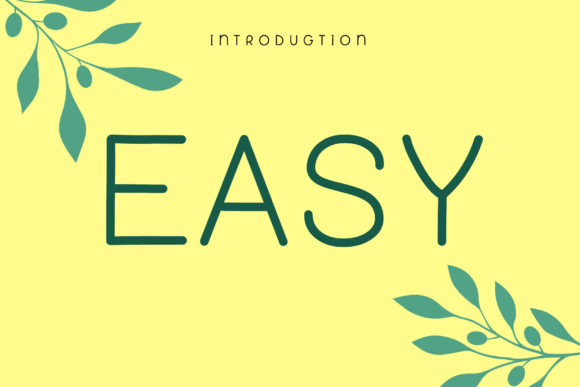
Easy: A Display Font That Simplifies Design Decisions
There’s a moment in every creative project where you stare at a screen full of font options and feel a familiar wave of decision fatigue. You need something that looks good, communicates clearly, and doesn’t require a design degree to implement. That’s where a typeface like Easy comes in—it’s a clean, simple display font built for real-world use, not just theoretical beauty. Whether you’re drafting a social media post, finalizing a logo, or laying out a wedding invitation, the right font can make or break the visual impact. Easy is designed to remove the guesswork, offering a straightforward aesthetic that adapts across contexts without losing its charm.
Why Simplicity Works in Modern Design
In a world saturated with visual noise, clarity is a competitive advantage. Easy embraces a minimalist approach, balancing readability with enough personality to stand out. It’s not overly stylized or trendy, which means it won’t feel dated in six months. Think of it as the typographic equivalent of a well-fitted white t-shirt—versatile, reliable, and always appropriate. For small business owners and content creators, this kind of flexibility is gold. You can use it for a blog header one day and a product label the next, maintaining visual consistency without juggling multiple typefaces.
The font’s clean lines and open letterforms make it particularly effective for digital screens, where legibility at smaller sizes is crucial. But it also holds its own in print, from business cards to posters. If you’ve ever struggled with a script font that looked beautiful in a mockup but turned into an illegible mess on a physical flyer, you’ll appreciate Easy’s practicality. It’s a premium font that prioritizes function without sacrificing style.
Practical Applications Across Projects
Let’s get specific. Imagine you’re launching a new skincare line. Your packaging needs to convey cleanliness and approachability. Easy could work beautifully for the product name on a minimalist bottle, or for the supporting text on a box. Pair it with a simple sans serif for ingredients, and you have a cohesive look that feels professional. Alternatively, if you’re a blogger designing a media kit, Easy’s straightforward character makes it ideal for headlines and pull quotes—it grabs attention without overwhelming the content.
For social media graphics, where you have about two seconds to stop someone from scrolling, a display font with clear personality is invaluable. Easy’s balanced weight and spacing ensure your message is readable even on a small phone screen. Use it for Instagram quotes, Pinterest pins, or Facebook ads. It’s also a strong candidate for digital products like ebook covers or online course materials, where a polished appearance builds credibility.
Don’t overlook print applications either. Wedding invitations, greeting cards, and planners often call for a font that feels personal yet refined. Easy’s simplicity lets other design elements—like illustrations or paper textures—shine without competing for attention. For merchandise like tote bags or mugs, its clean outlines reproduce well across different printing methods.
Improving Visual Consistency and Brand Recognition
One of the biggest challenges for growing brands is maintaining a consistent visual identity across platforms. Using a single, versatile typeface like Easy for multiple touchpoints can streamline this process. When your website headers, email newsletters, and printed materials share the same typographic voice, it reinforces brand recognition. Customers start to associate that font style with your business, creating a subtle but powerful form of recall.
Readability is another key factor. A font that’s easy to read reduces cognitive load for your audience, making your content more accessible. This is especially important for longer text blocks, like blog posts or product descriptions. Easy’s open counters and balanced proportions help the eye move smoothly across lines of text, which can improve engagement and time-on-page.
From a professional standpoint, a well-chosen typeface elevates your presentation. It signals attention to detail and thoughtful design, whether you’re sending a client proposal or posting a promotional graphic. In crowded markets, these small touches can differentiate your brand from competitors who default to overused system fonts.
Making Smart Typography Choices
Choosing a font isn’t just about personal preference—it’s about aligning with your project’s goals. Ask yourself: What emotion should this design evoke? Who is the intended audience? Easy’s neutral yet friendly character makes it suitable for a wide range of contexts, but it’s worth testing it against your specific needs. Try it in a mockup for your next campaign. Does it complement your color palette? Does it work with your imagery?
Font pairing is another area where Easy shines. Because it’s a display font, it often works best for headlines or titles, paired with a more subdued body font. A classic serif or a clean sans serif can create a nice contrast without visual conflict. For example, use Easy for a poster headline and a simple sans serif for event details. The goal is hierarchy—guiding the viewer’s eye through the information in a logical way.
Always consider readability at different sizes. A font that looks great large might lose clarity when scaled down. Test Easy in various contexts: on a mobile screen, in a printed brochure, on a billboard mockup. This hands-on approach helps you catch potential issues before they become costly mistakes.
Understanding Licensing and Font Styles
Before finalizing your choice, review the font’s licensing terms. Many premium fonts, including Easy, come with different licenses for personal and commercial use. If you’re designing for a client or selling products that feature the font, ensure your license covers those applications. This protects you legally and supports the designers who create these valuable assets.
Also, explore the included font styles. Some display fonts offer multiple weights or stylistic alternates, which can expand your creative options. Does Easy include bold or italic versions? Are there different character sets for multilingual support? These details might seem minor, but they can save you time and frustration later, especially if your project evolves.
In the end, typography is about communication. A font like Easy works because it doesn’t get in the way of your message—it enhances it. Whether you’re a solopreneur building a brand from scratch or a marketer refreshing a company’s visual identity, having a reliable, adaptable typeface in your toolkit is a practical advantage. It’s not about chasing trends; it’s about choosing tools that help you work smarter and connect more effectively with your audience.